

Home
Home is the first screen admins and approvers see. It shows one thing to do next, then how your programme stands. Employees see My policies as their home instead.
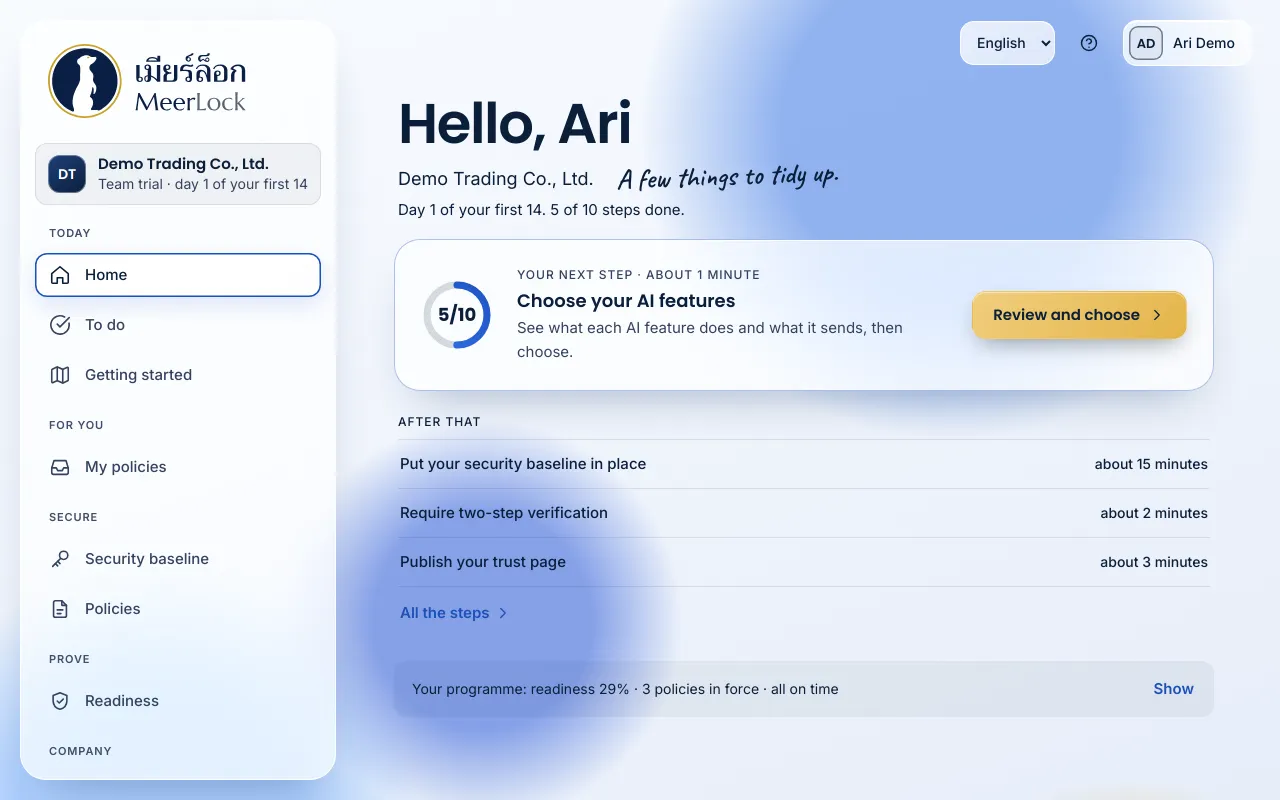
What you see in your first 14 days
- A greeting and one quiet line, such as the day you are on and how many steps are done.
- A card with the progress ring and Your next step, with the time it takes. Press its gold button to go straight to the place to do it.
- After that lists the next steps. All the steps opens Getting started.
- Everything else is folded behind Your programme: with a short line such as readiness, policies in force and what is late. Press Show to open it. Your choice is remembered.
What you see after that
Once the first two weeks of steps are done, or day 14 has passed, Home shows one sentence and one gold button:
- If something is late, See what is late opens your To do.
- When everything is on time, Open readiness shows how ready you are and what would raise it most.
- If steps remain, a quiet link such as Keep it running: 3 steps left. takes you to them.
Under it, the programme is always open.
The cards in the programme
- Readiness shows a percentage for each framework you picked. Press Open readiness for the detail.
- Late lists what is overdue, the same rows as To do. A tap opens the thing itself.
- Waiting on people lists published policies that people have not acknowledged yet. Press Remind on a policy to remind its readers. Remind everyone who has not acknowledged after 14 days sends one email per person. Each can be used once a day.
- Recent activity shows the last few changes in the company.
How to get a card back
- If Readiness says "Pick your frameworks to see how ready you are", open Settings and pick them.
- If you hid the Getting started card, open Getting started and turn on Show on the home page.
Good to know
- The two-step verification line appears here when you have not set it up. See Signing in.
- Everything on Home comes from your real data. A figure changes when a policy is published or acknowledged.
- Approvers see their own late rows rather than the whole company's.